


Darren Greatbatch, Specialist Advisory Manager, Amenity & Invasive Weeds, at Environment Controls.
Last reviewed on .
Horsetail in the UK: Why it’s hard to eradicate (and why it’s a growing risk for property & construction)
Think Horsetail is just a stubborn weed? Think again! In this article experts explain why Horsetail (Equisetum arvense) or mare’s tail, is one of the most misunderstood and persistent invasive weeds in the UK. Whilst it’s not as well-known as Japanese knotweed discover why for many homeowners and construction professionals, it’s becoming just as frustrating.
The reality is Horsetail doesn’t go away on its own and DIY removal often makes it worse. Horsetail really is one for the professionals to get rid of – read on to find out why.
In a nutshell Horsetail is difficult to remove because:
- It has deep underground rhizomes (up to 2 metres)
- It can regrow from tiny root fragments
- It contains silica, which makes it resistant to many herbicides
This means it is a long-term problem that requires specialist knowledge and expertise.
The Big Problem: People Don’t Understand Horsetail
Most enquiries that we receive start the same way:
- “It just appeared overnight”
- “I’ve tried weedkiller and it keeps coming back”
- “I dug it out and now it’s worse”
That’s because Horsetail behaves differently to normal weeds. Instead of growing from the surface, it spreads deep underground, often across boundaries and beneath structures.
ALL YOU NEED TO KNOW ABOUT HORSETAIL

Horsetail in Gardens: The Reality for Homeowners
DIY removal doesn’t work. Common approaches include digging it out, pulling the stems up or using off-the-shelf weedkillers. Unfortunately, these often break up the root system, spread fragments further and trigger more regrowth. The result: more horsetail, not less.
Will Horsetail Affect Property Value?
Unlike Japanese knotweed, horsetail is not typically subject to the same legal restrictions. However, it can raise concerns during surveys, buyers may see it as a long-term issue as it signals difficult ground conditions. The risk with Horsetail on your property is perception and confidence, not just legality.
How Long Does It Take to Get Rid of Horsetail?
Realistically it can take 2 – 5+ years of ongoing management. There is no instant solution only controlled, professional treatment strategies.
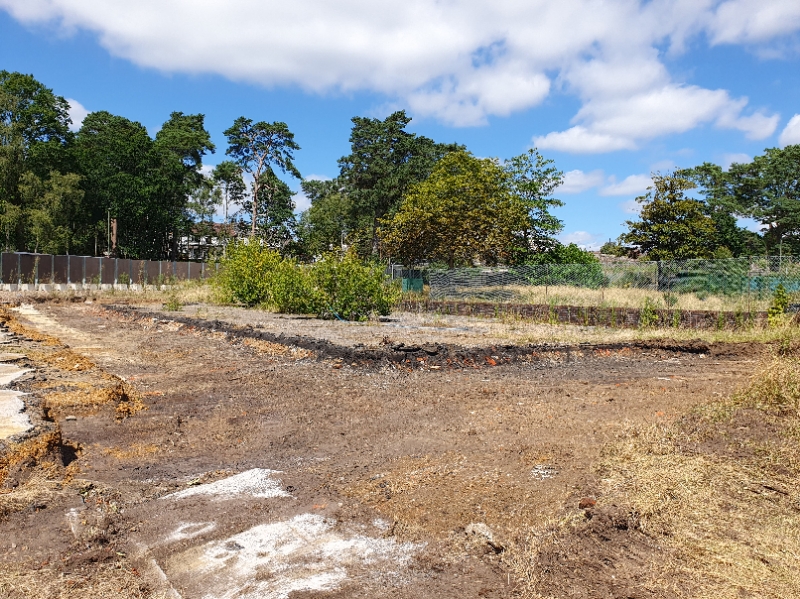
Horsetail on Construction Sites: A Hidden Project Risk
For developers, contractors, and groundworkers, horsetail is increasingly being treated as a ground risk – not just a weed. Because Horsetail looks so different throughout the year it can be difficult to identify, whereas a professional surveyor will identify Horsetail all year round. Construction sites can encounter the following risks if Horsetail is found onsite and even longer term issues if it’s ignored and development goes ahead without dealing with the Horsetail problem.
1. Programme delays. If horsetail is identified during works:
- Additional assessment may be required
- Treatment strategies need to be implemented
- Earthworks may be impacted or grind to a halt
Late discovery = delay and cost
2. Regrowth through hard surfaces. If not dealt with properly, Horsetail can:
- Penetrate weak points in tarmac and paving
- Regrow through membranes
- Reappear after construction
Long-term defect = liability risks
3. Groundworks & soil management. Because of its deep root system:
- Excavation must be carefully controlled
- Soil movement can spread the plant
- Reuse of material may be restricted
You can’t just “scrape and build”
4. Commercial & Reputational Risk. Failure to manage horsetail properly can lead to:
- Ongoing maintenance issues
- Client dissatisfaction
- Potential claims
Increasingly, for construction and development it’s being treated like a contamination issue.
Horsetail won’t go away without professional help. The biggest misconception is: “If I keep treating it, it will eventually die off” but in reality:
- Most DIY methods don’t reach the root system
- Herbicides require correct timing and application
- Excavation without controls can spread it further
What actually works is effective horsetail management, which typically includes either targeted herbicide programmes or controlled excavation (where required), both combined with long-term monitoring and management. The key is to identify it early and take control quickly.
CASE STUDY: HORSETAIL REMOVAL ON DEVELOPMENT SITE
How we help
At Environment Controls, we regularly support homeowners dealing with persistent garden infestations, commercial developers identifying horsetail during site investigations and contractors needing fast, compliant solutions to a problem they’re not equipped to deal with. In most cases, the issue has already been mismanaged or underestimated early on, and that’s where we step in.
If you think you’ve found Horsetail, don’t wait until it becomes a bigger problem. We can help by identifying horsetail quickly, assessing and reporting on the level of risk and providing a clear, practical management plan with costs geared to suit you or your site.
Whether you’re managing a property, selling a home or starting a construction project – speak to one of our specialists and get clarity on your next steps.
People Also Ask
Is horsetail as bad as Japanese knotweed? It’s different not as regulated, but still highly persistent and difficult to control.
Can horsetail damage buildings? It can grow through weak surfaces and cause long-term maintenance issues.
What kills horsetail permanently? There is no instant solution — long-term professional management is usually required.
Should I dig out horsetail? No – digging can spread the plant and make the problem worse.