


Darren Greatbatch, Specialist Advisory Manager, Amenity & Invasive Weeds, at Environment Controls.
Last reviewed on .
Can you be held liable if Bamboo spreads into a neighbour’s property?
Many homeowners are surprised to learn that while bamboo is not currently listed under Schedule 9 of the Wildlife and Countryside Act 1981, allowing it to spread beyond your property’s boundaries can still have serious legal and financial consequences, and homeowners do have a legal duty to prevent encroachment.
Unlike Japanese knotweed, there is currently no specific legislation making it a criminal offence to have bamboo growing on your land. However, that does not mean property owners are free from responsibility. In this article we explain what happens if bamboo spreads into a neighbouring garden or causes damage to adjacent land, structures, or property, and why homeowners may face legal action under civil law. Included is expert advice from a solicitor on how to avoid legal action.

Bamboo encroachment and private nuisance claims
In the UK, property owners have a legal duty to prevent issues on their land from causing harm or interference to neighbouring properties. If bamboo rhizomes (underground roots) spread across a boundary and begin to invade a neighbouring garden, the affected property owner may have grounds to pursue a private nuisance claim.
This could result in:
- Requests to remove the bamboo at the expense of the property owner with the originating bamboo.
- Claims for the cost of professional treatment or removal.
- Claims for repairing damaged landscaping, patios, driveways, fences, or retaining structures.
- Legal costs associated with resolving the dispute.
As awareness of invasive bamboo continues to grow, disputes between neighbours relating to bamboo encroachment are becoming increasingly common.

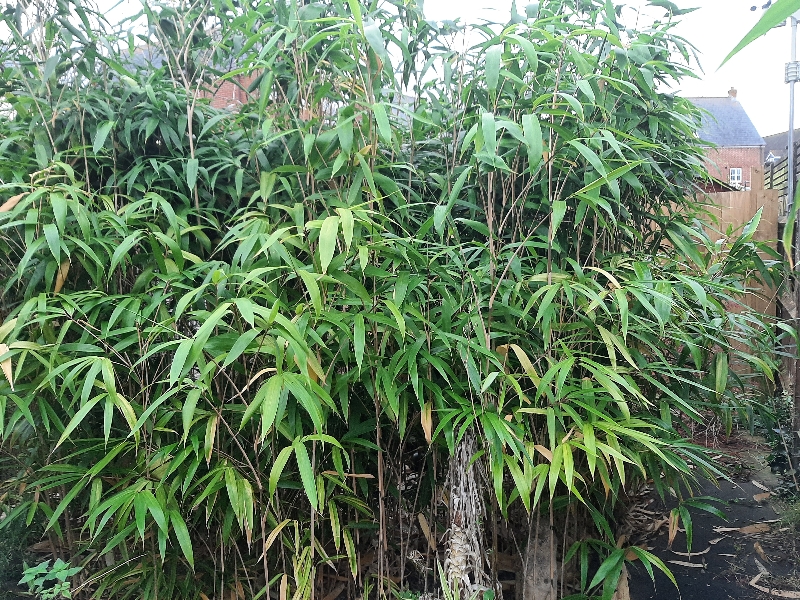
Property damage can increase liability
Running bamboo species are particularly problematic because their underground rhizomes can travel considerable distances in search of space and moisture. Once established, bamboo can emerge unexpectedly in neighbouring gardens, flower beds, lawns, and even through cracks in hard surfaces such as driveways or patios.
In severe cases, bamboo has been known to:
- Dislodge paving and patios.
- Damage garden structures.
- Invade drainage systems.
- Penetrate lawns and planting areas.
- Spread beneath boundary fences and walls.
If it can be demonstrated that a property owner was aware of the problem and failed to take reasonable action, this may strengthen a neighbour’s claim for recovery of costs.
Legal expert advice
To get the facts about the legal implications of Bamboo encroachment, Environment Controls consulted with their legal advisor David Richards of Roach Pittis on the matter, here’s the official line:
“ Bamboo can give rise to a claim in private nuisance where it has encroached from one property onto another. In order for such a claim to succeed, a claimant would generally need to satisfy the Court that:
- The bamboo has encroached from the neighbouring property onto their land; and
- The neighbouring landowner was aware, or ought reasonably to have been aware, of the issue and failed to take reasonable steps to prevent the bamboo from spreading.
“A homeowner may therefore be able to pursue a legal claim against their neighbour if they can demonstrate that the encroaching bamboo originated from the neighbouring property and has caused damage or loss.
“However, unlike Japanese knotweed claims, claimants are generally limited to recovering the reasonable costs of treatment and any necessary remedial works. The Courts do not generally recognise a claim for diminution in value (loss in property value) arising solely from the presence of bamboo, as bamboo is not considered to carry the same stigma as Japanese knotweed.
“Where a Court finds that bamboo has encroached from a neighbouring property and that the neighbour has failed to take reasonable steps to address the issue, the neighbour may be held liable for the costs of treatment, removal, and any associated remediation works. Depending on the circumstances, they may also become liable for legal costs and any damages awarded by the Court.”
The impact on property sales
Bamboo encroachment can also create complications when selling a property. Increasingly, surveyors, buyers, and solicitors are becoming aware of the risks associated with invasive bamboo.
If a known bamboo infestation has spread beyond the property’s boundaries or has been the subject of a neighbour dispute, this may need to be disclosed during the conveyancing process. Failure to disclose known disputes or issues could potentially create additional legal complications later. All of which could potentially pur buyer’s off making an offer in favour of a property without bamboo.
Conclusion: Prevention is always more cost-effective
So now you know the legal implications of Bamboo encroachment, what steps can you take?
The cost of controlling bamboo before it spreads is often significantly lower than dealing with a mature infestation that has crossed into neighbouring land. Early intervention can prevent expensive removal works, potential legal disputes, and at the very least – strained relationships with neighbours.
Professional bamboo management should include:
- Site surveys and species identification.
- Full report of the infestation and proof of visible rhizome spread.
- Targeted herbicide treatment or excavation and removal options.
- Installation of specialist bamboo root barriers if advised.
- Ongoing monitoring and maintenance.
Take action: Protect your property and your neighbours
If you have bamboo growing on your property, particularly a running bamboo species, it is important to monitor its spread and seek professional advice before it becomes a wider issue. Taking proactive action not only protects your own property but can also help avoid costly neighbour disputes, legal claims, and extensive remediation works in the future.
If you are concerned about bamboo spreading beyond your boundary, our specialist team can assess the infestation and recommend the most effective treatment or removal solution for your property.